
A closer look at the Dual Hinge Inserter Alignment Tool
One of those components is the Dual Hinge Inserter Alignment Tool, not the flashiest name, not a device that most people outside orthopaedics will ever hear about, but a perfect example of the kind of work that goes into modern medical and veterinary surgery.
What the tool actually does
The tool is used to help align and position dual-hinge implants during surgery or pre-surgery assembly. These implants rely on two hinge points working together, so if they’re even slightly off-angle, the device won’t perform as it should. That can affect motion, comfort, wear, or long-term durability.
This alignment tool removes the guesswork. It gives the surgeon or technician a controlled, repeatable way to check the hinge geometry and make sure everything is exactly where it needs to be. When you’re talking about implants that will stay in a patient’s body for years, sometimes decades, those small checks make a huge difference.
Why this matters in real life
For the patient: It means a smoother surgery and an implant that performs the way it was designed to.
For the surgeon: It means reliability. No fiddling. No “does that look right?”. The tool confirms it.
For the OEM: It means fewer returns, fewer issues in the field, and a manufacturing partner who understands the clinical impact of the work.
And for Kirkstall: It’s another example of the level of detail needed to support the medical and veterinary sector properly.
How it comes together at Kirkstall
The tool goes through the same disciplined process as every other medical component here:
High-tolerance machining to cut the main body and hinge features.
Finishing and deburring by hand and machine so every edge, slot and face is clean and consistent.
Surface treatment depending on the specification, often to improve durability or resist corrosion.
Inspection, where every dimension, angle, slot width and functional movement is checked and logged.
Traceability and documentation, because nothing leaves the building without the full paper trail demanded in regulated med-tech environments.
It’s a routine the team know inside-out, but it never becomes “just another job”. Each step matters and each tool carries the same weight of responsibility: someone, somewhere, will rely on it.
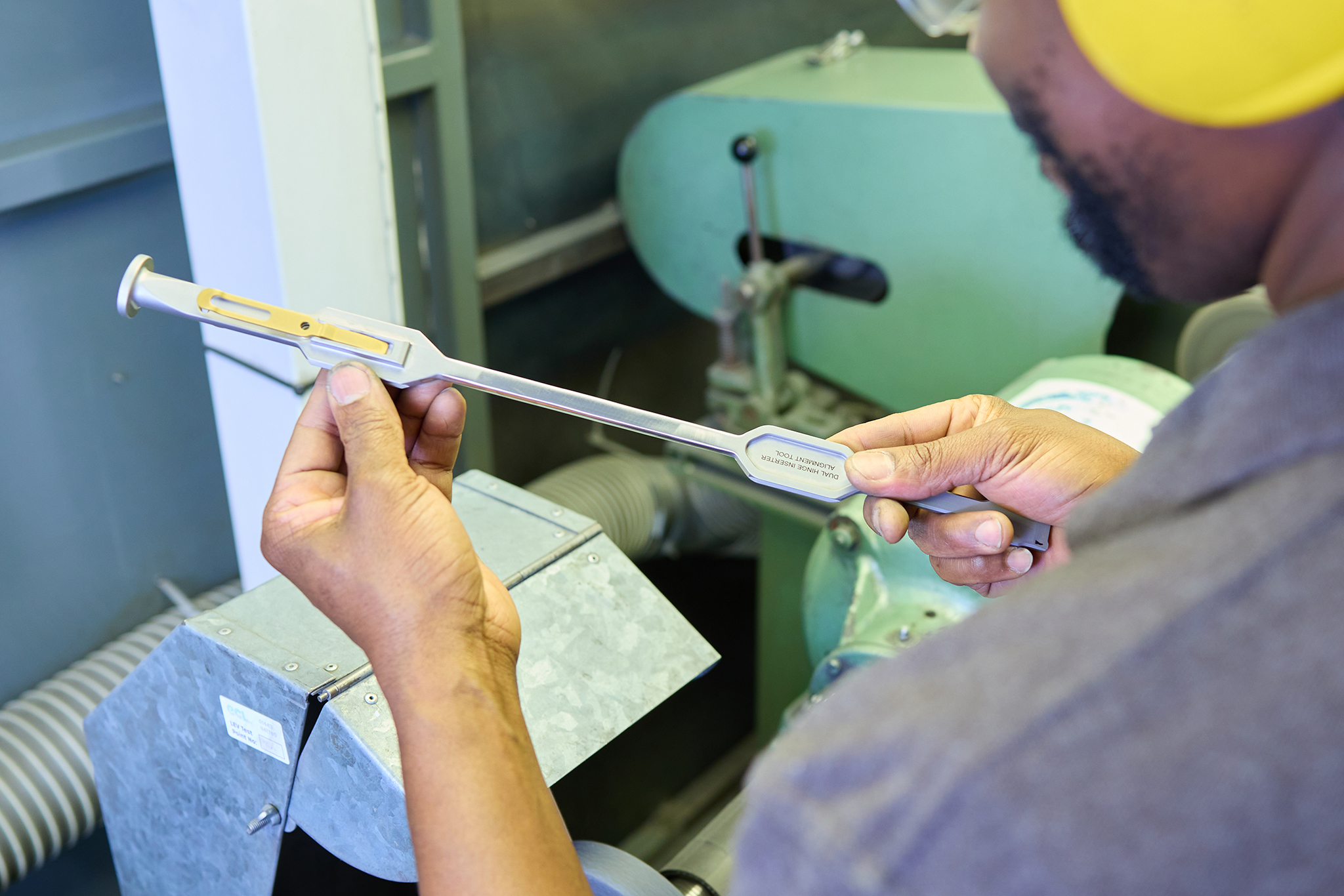
Lucyna Kubik, Quality Inspector, at work at Kirkstall Precision
A small tool that tells a bigger story
The Dual Hinge Inserter Alignment Tool might look simple at first glance. But it represents the bigger picture of what Kirkstall does every day, machining, finishing and inspecting the tools and components that sit behind successful operations in orthopaedic, spinal, surgical and veterinary medicine.
It’s a reminder that progress in healthcare doesn’t always come wrapped in futuristic machines or headline-grabbing implants. Sometimes it’s the small, precisely-made tools that quietly make surgery safer, faster and more predictable.
And that’s exactly the space where Kirkstall Precision works best: Behind the scenes, at the point where engineering meets clinical need, helping to make sure every operation has what it needs to succeed.